Home > PRODUCT > Iron powder > reduced iron powder > iron powder for powder metallurgy
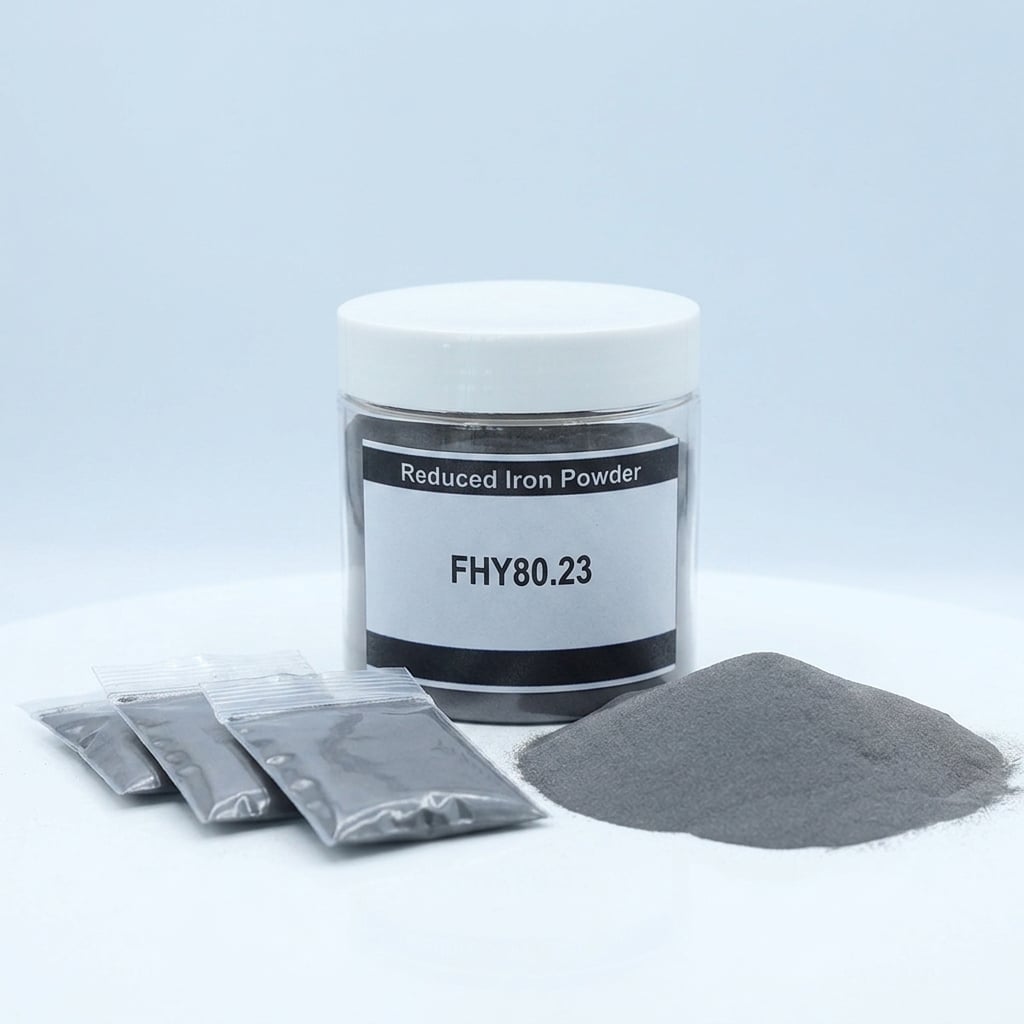
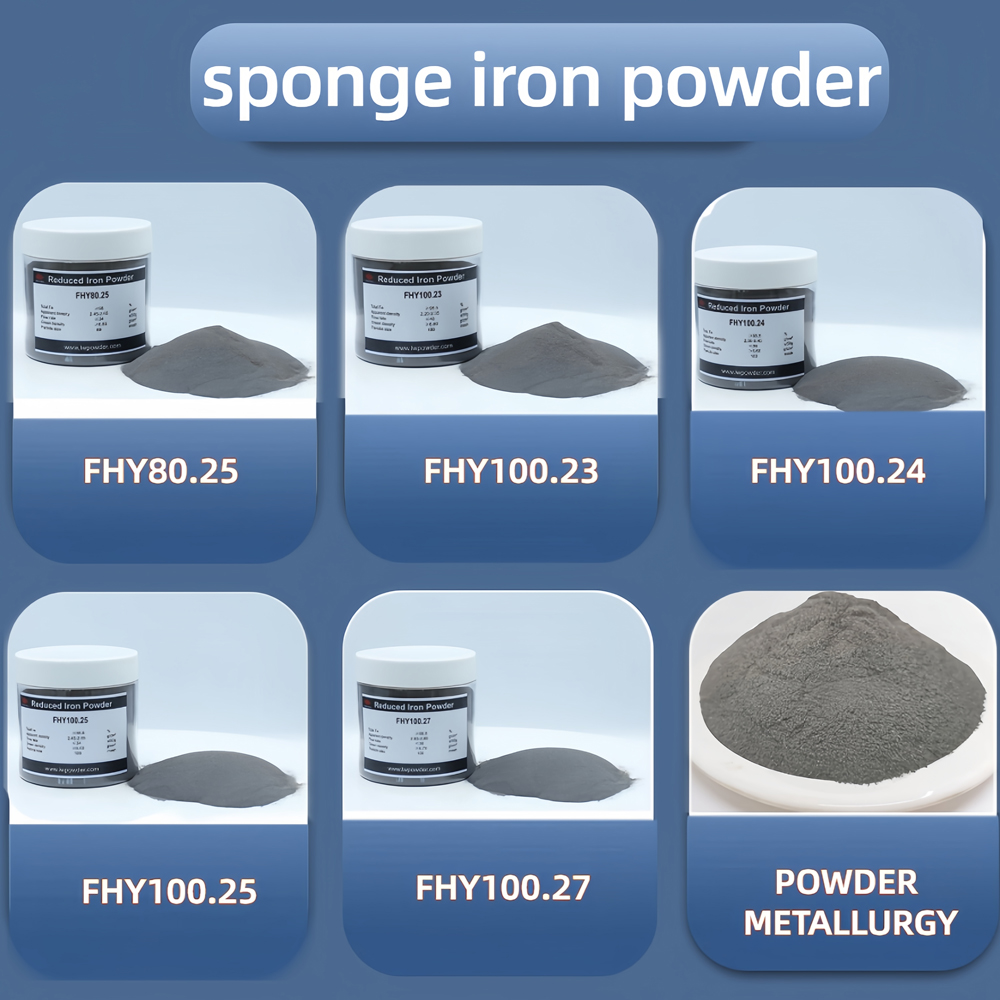
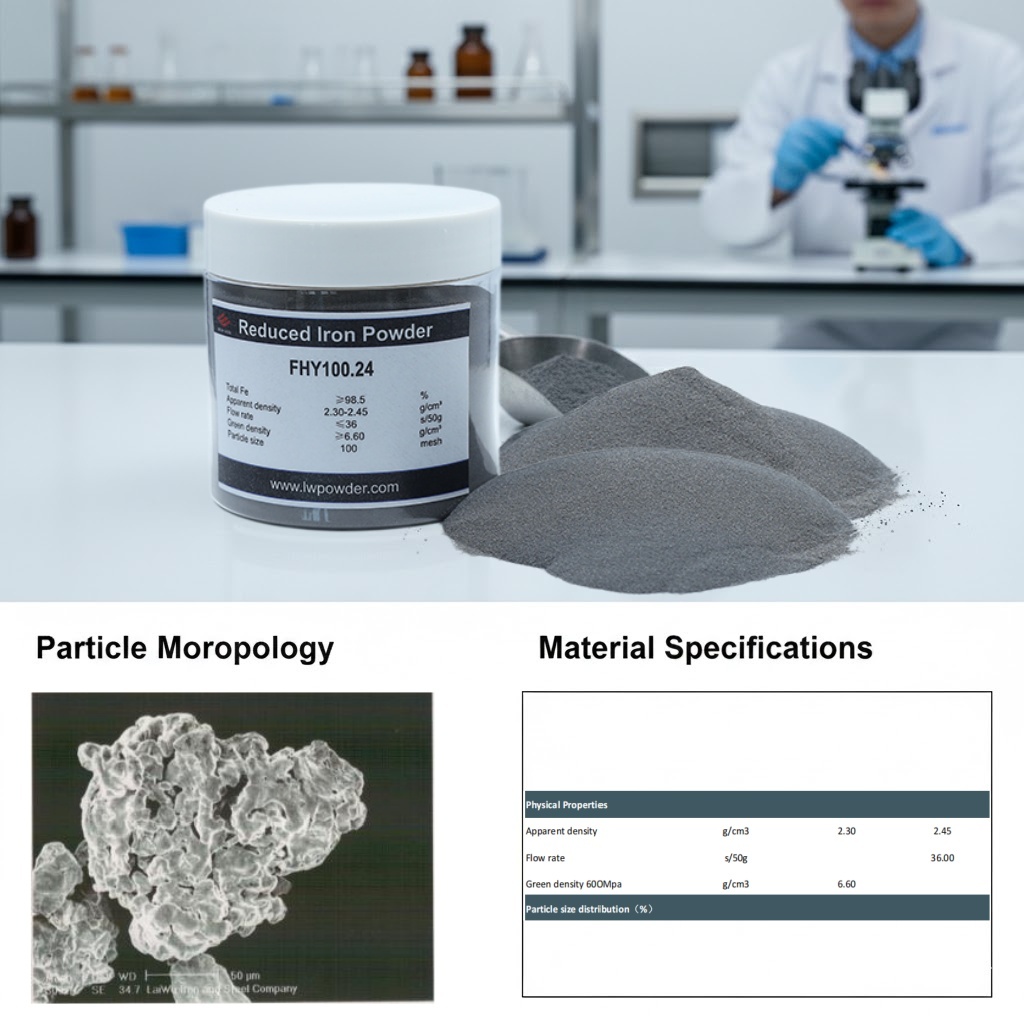
• Fe: 98.96 %
• Apparent density: 2.36 g/cm3
• Flow rate: 35.40 S/50g
• Green density 490Mpa: 6.67 g/cm3
• Particle size: 80 mesh
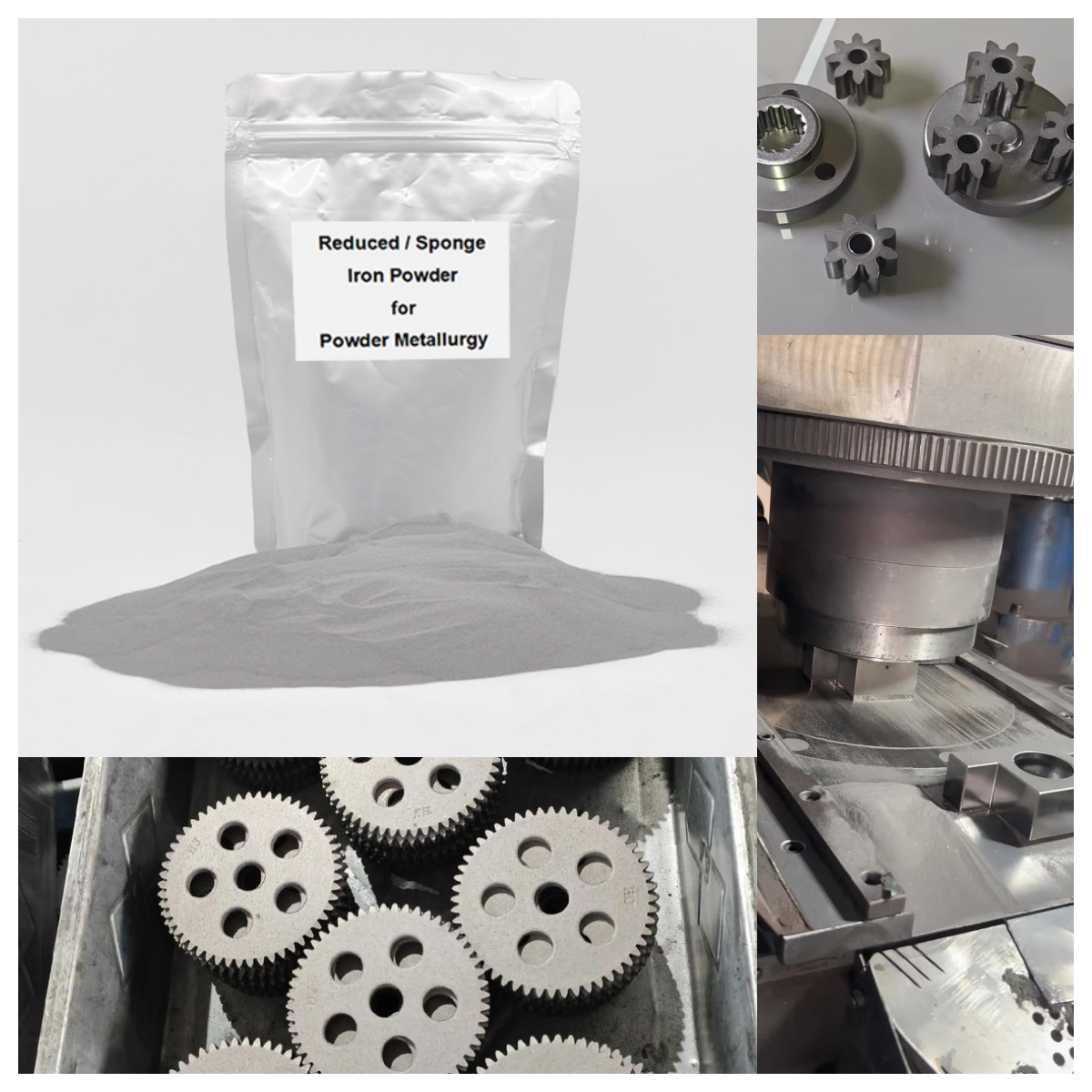
FHY80.23 is specially designed to match the requirements for self lubricating bearings. Its particle size range is chosen to give an optimum pore structure for this application. FHY80.23 can also be added to powder mixes in small quantities to substantially improve green strength.
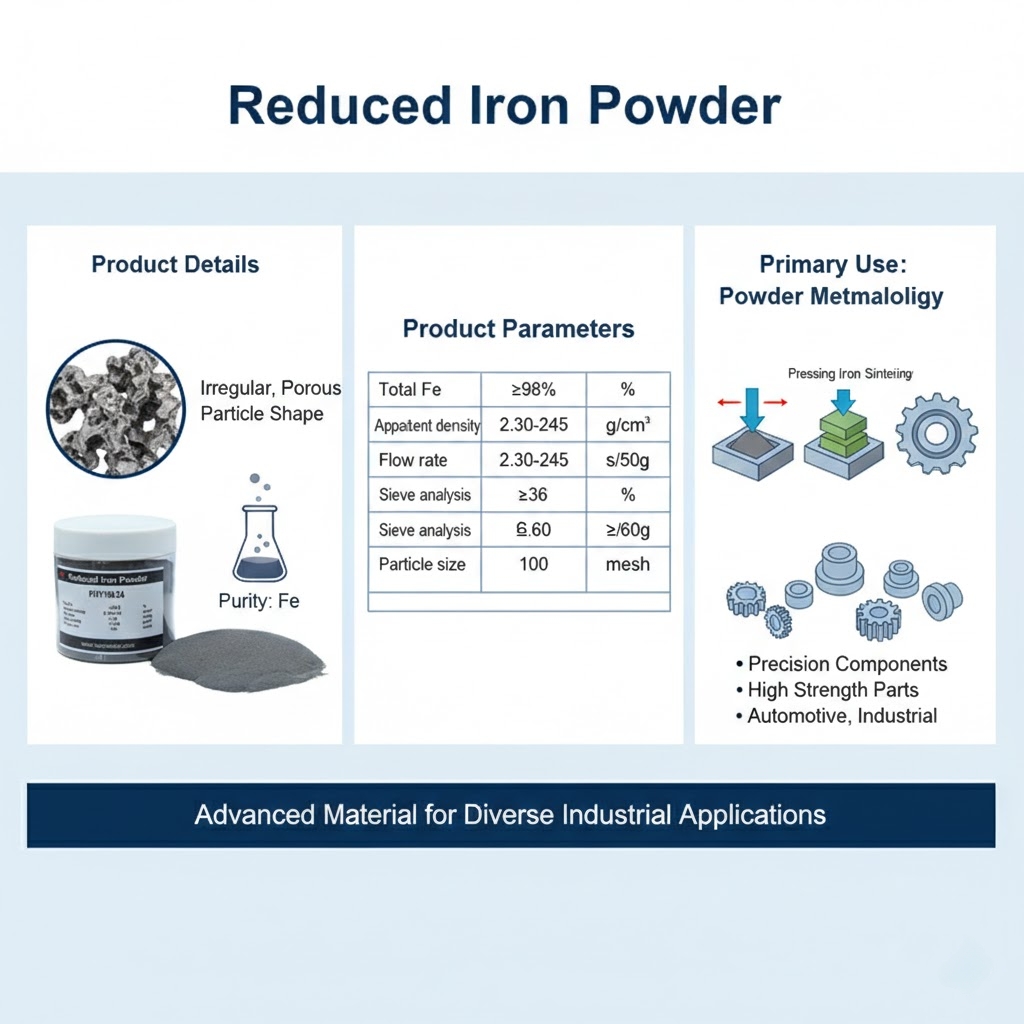
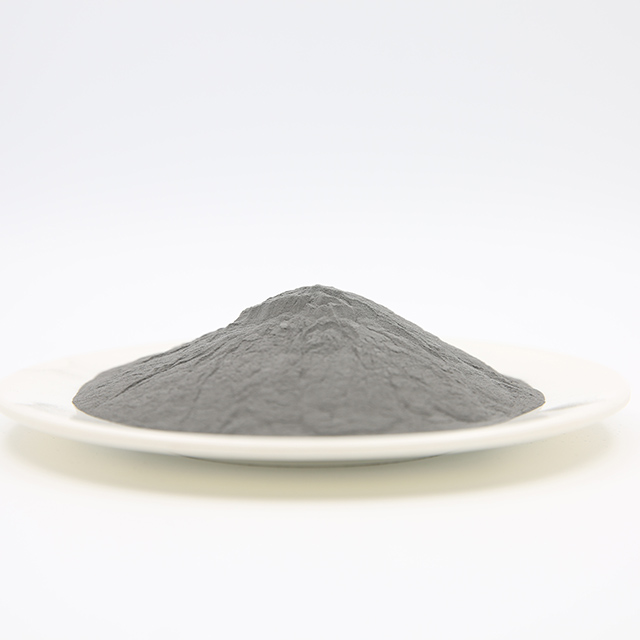
As the raw material of our reduced sponge iron powder is iron ore, our products characters include high purity, irregular particle shape, low apparent density, high green strength.
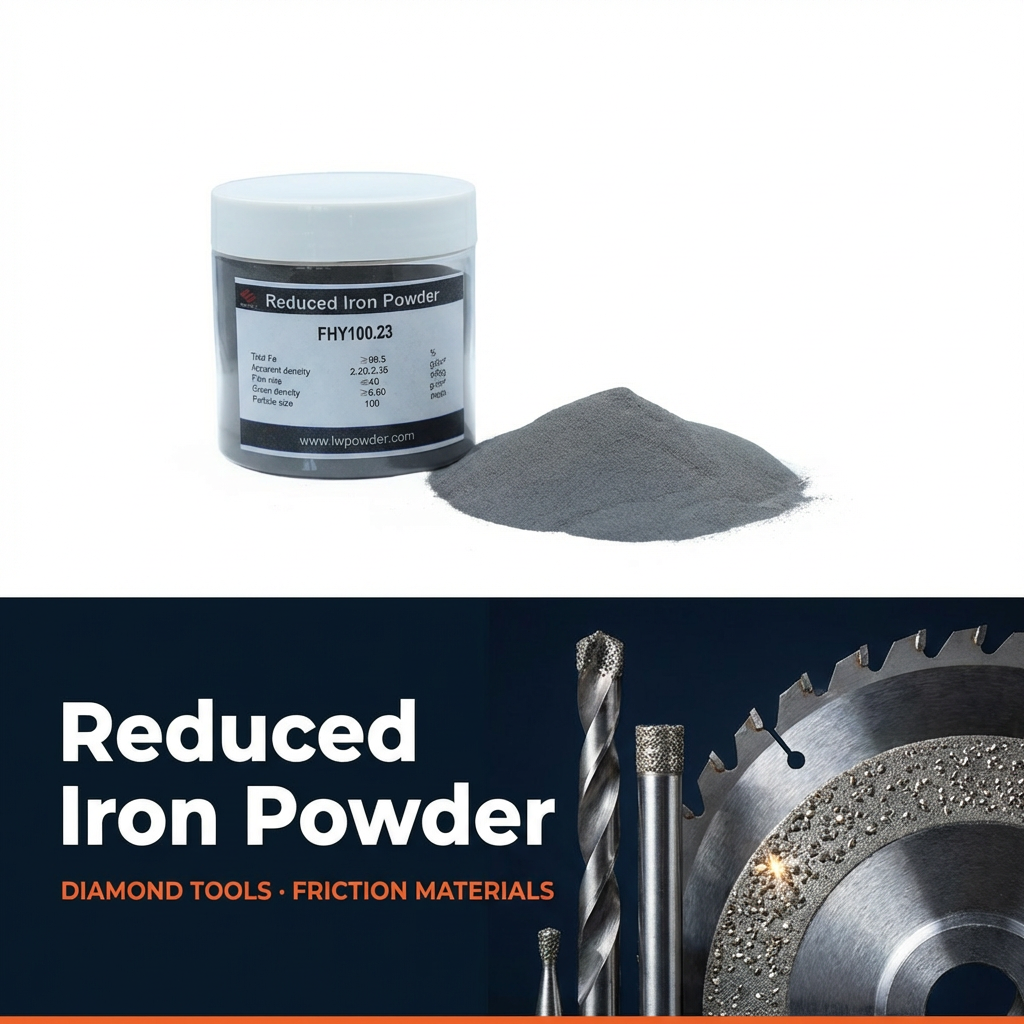
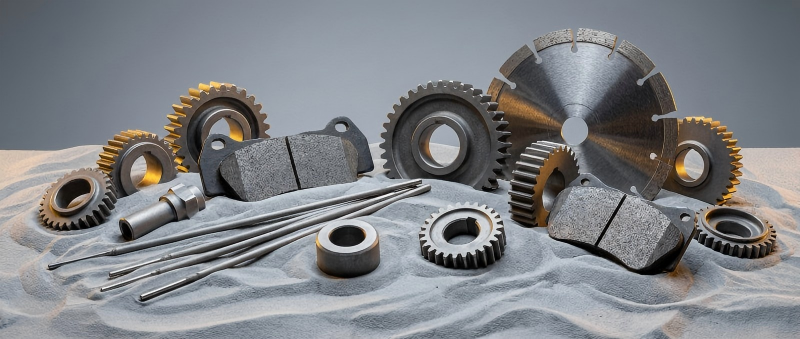
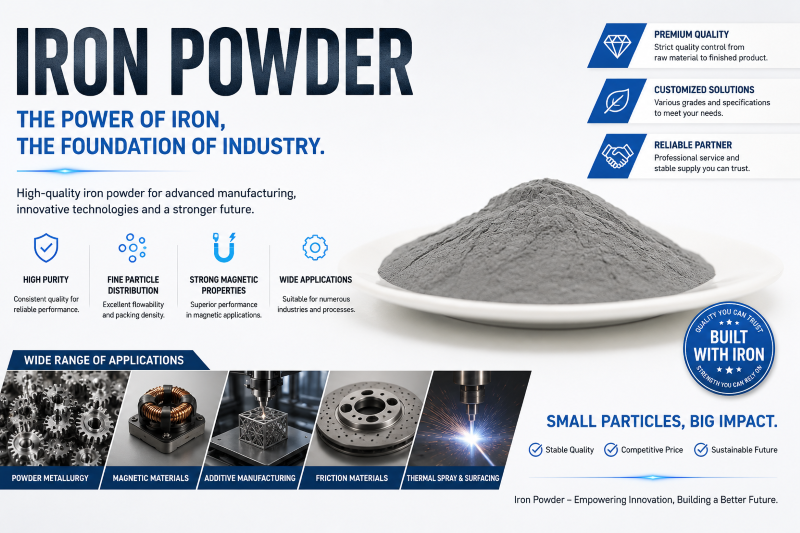
The main application include powder metallurgy, welding & cutting, friction (brake wrings), chemicals, diamond tools, oxygen absorbers, hand warmer. Carbonyl iron powder, Soft magnetic, lithium battery, water treatment, etc.
Our wide range of powders with varying chemical and physical properties can match your requirements very well.


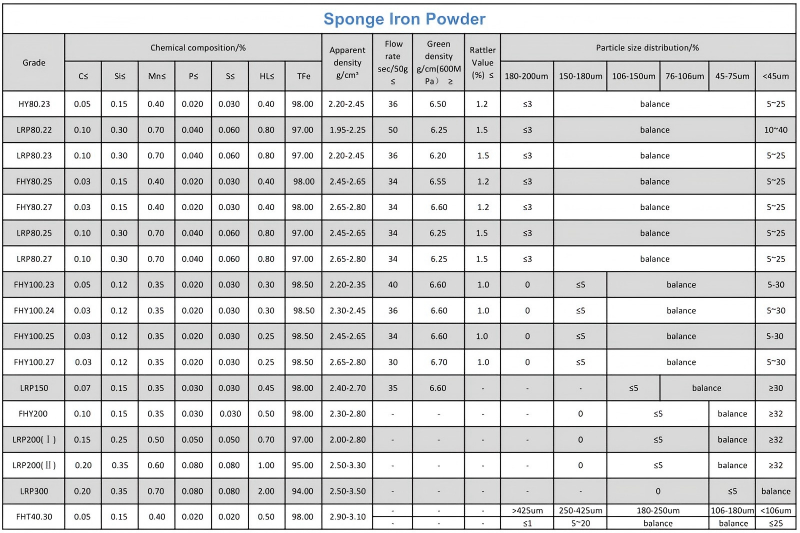
Specification of Reduced iron powder
FHY80.23
Specification of Reduced iron powder
FHY80.23
Chemical Properties(%) |
Unit |
Specification |
|
|
|
Min |
Max |
C |
% |
|
0.05 |
Si |
% |
|
0.15 |
Mn |
% |
|
0.40 |
P |
% |
|
0.02 |
S |
% |
|
0.03 |
HL |
% |
|
0.40 |
TFe |
% |
98.00 |
|
Physical Properties | |||
Apparent density |
g/cm3 |
2.20 |
2.45 |
Flow rate |
s/50g |
|
36.00 |
Green density 600Mpa |
g/cm3 |
6.50 |
|
Particle size distribution(%) | |||
180-200um |
% |
|
3 |
150-180um |
% |
|
|
106-150um |
% |
|
|
75-106um |
% |
|
|
45-75um |
% |
|
|
-45um |
% |
5 |
25 |
High Fe content and controlled impurity levels provide stable performance for demanding industrial applications.
The porous and irregular morphology provides a relatively high specific surface area and supports good compactability and sintering behavior.
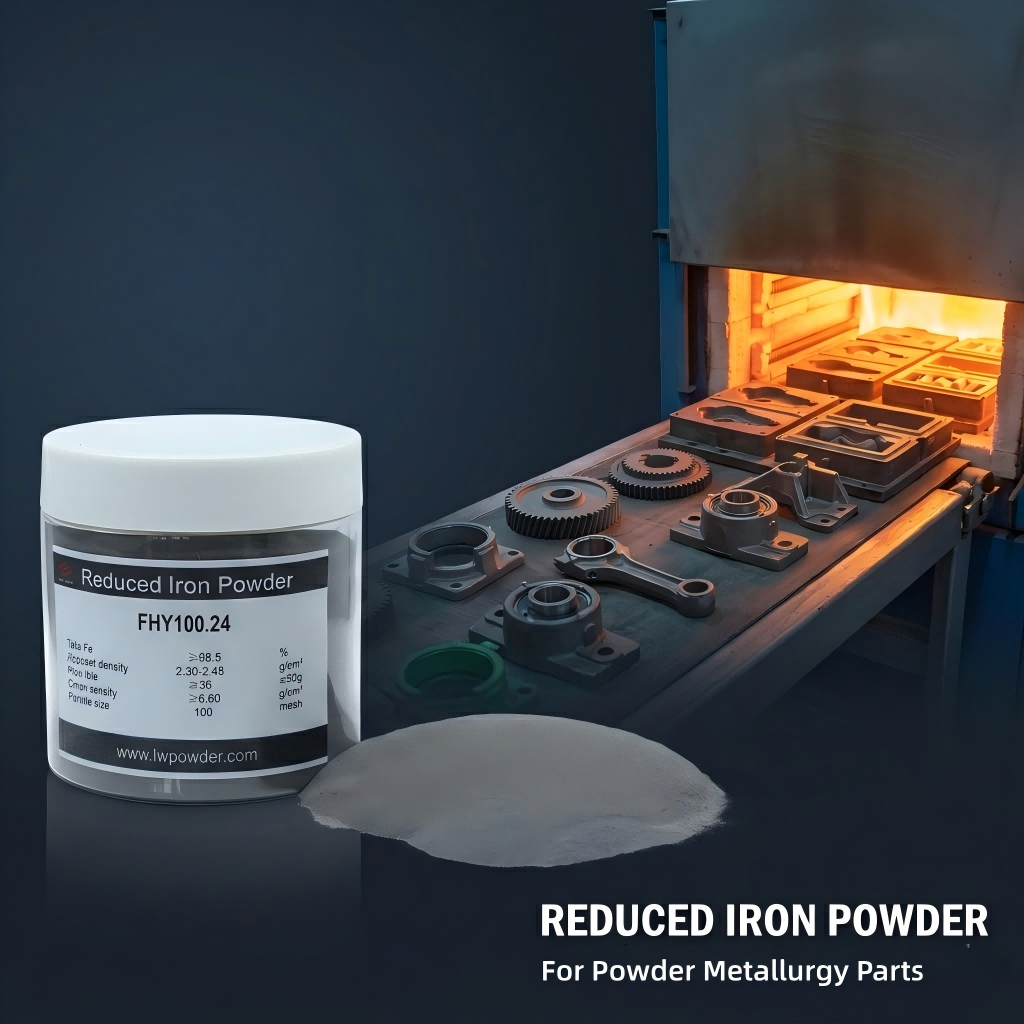
Suitable for powder metallurgy processes where powder flow, pressing and green density are important.
The particle morphology promotes effective particle bonding during sintering and can be used in a wide range of iron-based powder metallurgy formulations.
The porous structure and relatively large specific surface area make reduced iron powder suitable for applications requiring iron-oxygen or iron-chemical reactions.
Particle size can be supplied according to application requirements, including coarse, medium and fine grades.
Product Specification
COMPRESSIBILITY AND COPACTIBILITY PROPERTIES


SINTERED PROPERTIES


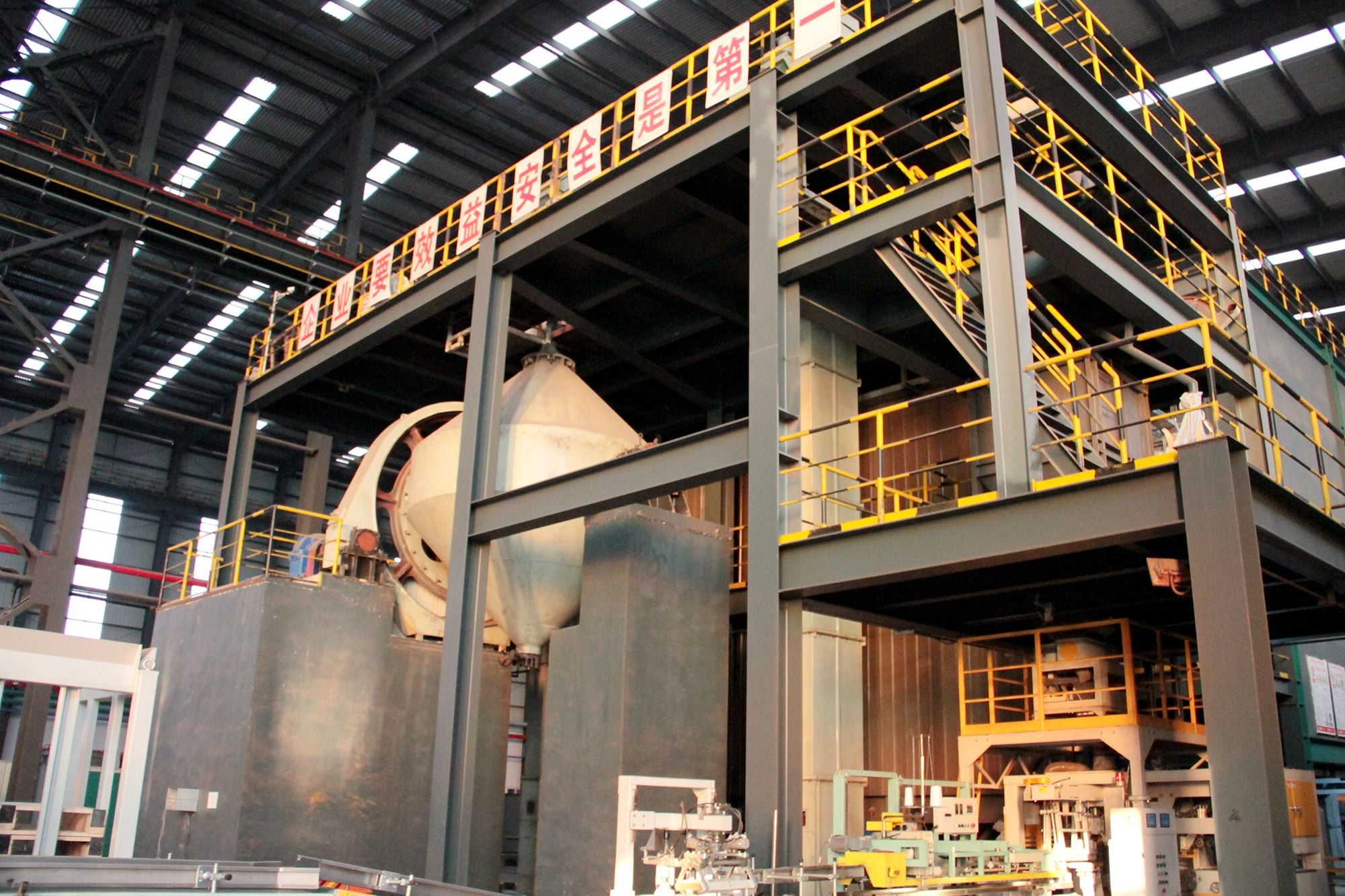
Reduced iron powder, also known as sponge iron powder, is manufactured by converting iron oxides into metallic iron through a reduction process.
A typical production route includes:
Iron Oxide → Reduction → Sponge Iron → Crushing → Grinding → Classification → Secondary Reduction → Reduced Iron Powder
The reduction process removes oxygen from iron oxides and converts them into metallic iron. Depending on the required product grade, further reduction and purification can be carried out to achieve higher metallic iron content and lower oxygen levels.
After reduction, the sponge-like iron is crushed and classified into controlled particle-size ranges.
The resulting powder generally features an irregular and porous particle morphology, which contributes to its compressibility, sintering characteristics and chemical reactivity.
PRODUCT PACKING
| Property | Typical Characteristics |
|---|---|
| Product | Reduced Iron Powder |
| Alternative Name | Sponge Iron Powder |
| Main Component | Metallic Iron |
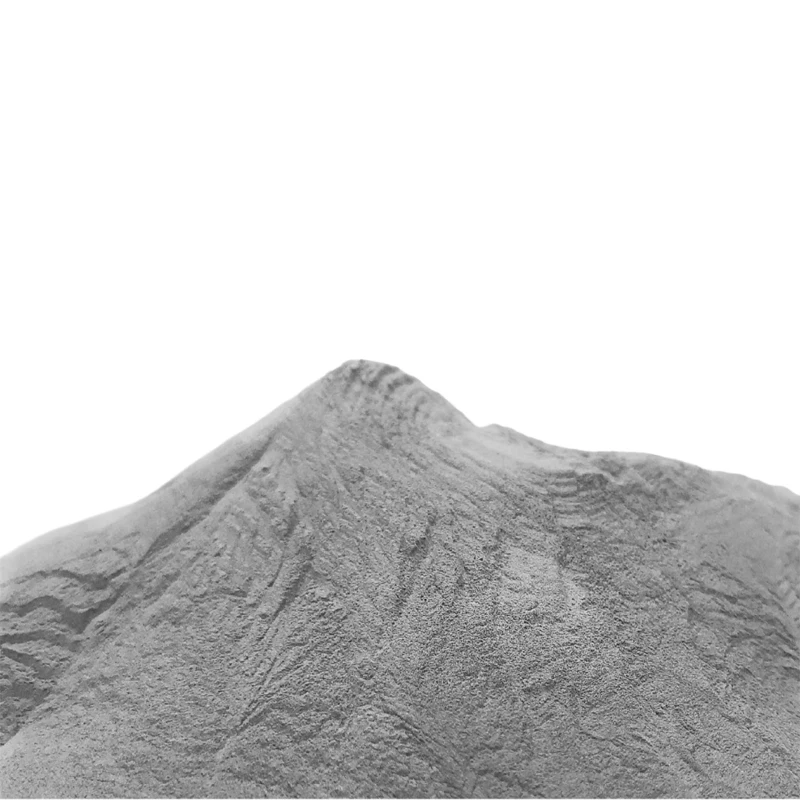
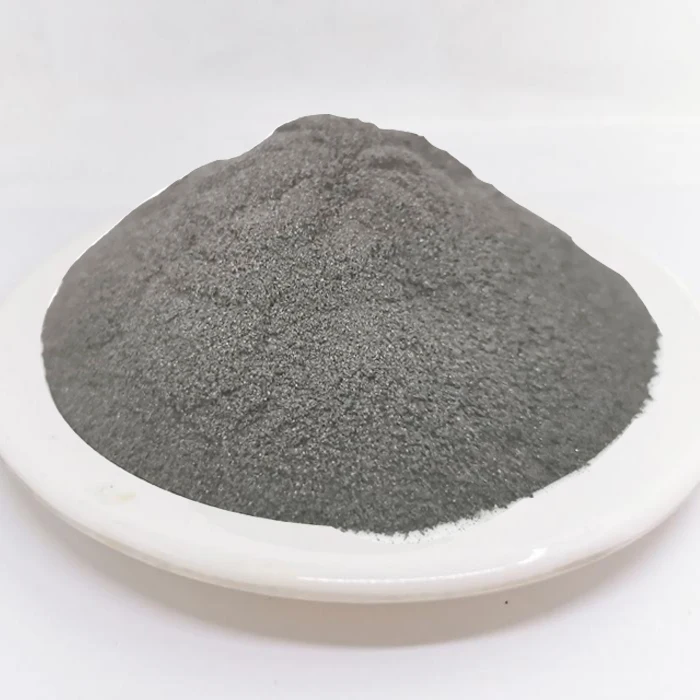
| Appearance | Gray / Dark Gray Powder |
| Particle Shape | Irregular, porous |
| Fe Content | Available according to grade |
| Particle Size | Customized according to application |
| Apparent Density | Available in different grades |
| Oxygen Content | Controlled according to grade |
| Carbon Content | Controlled according to grade |
| Flowability | Grade dependent |
| Compressibility | Good |
| Sinterability | Excellent |
| Packaging | 25 kg bags / big bags / customized |
Note: Technical specifications vary by product grade. Please contact us for the latest COA and detailed specification sheet.
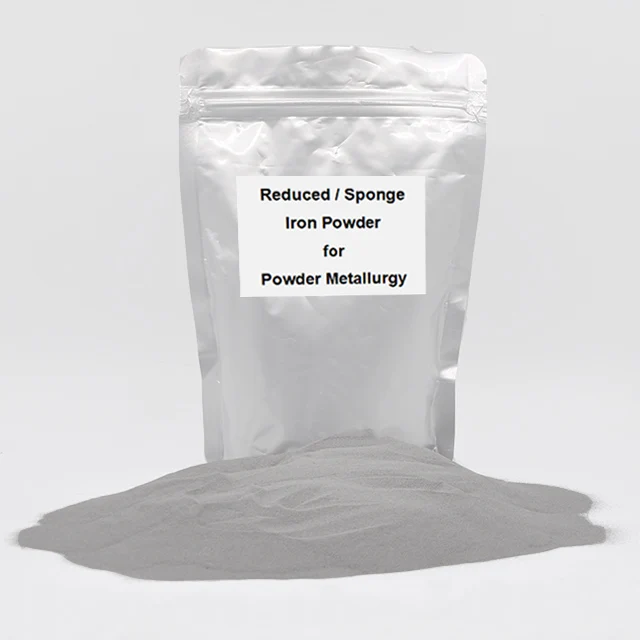
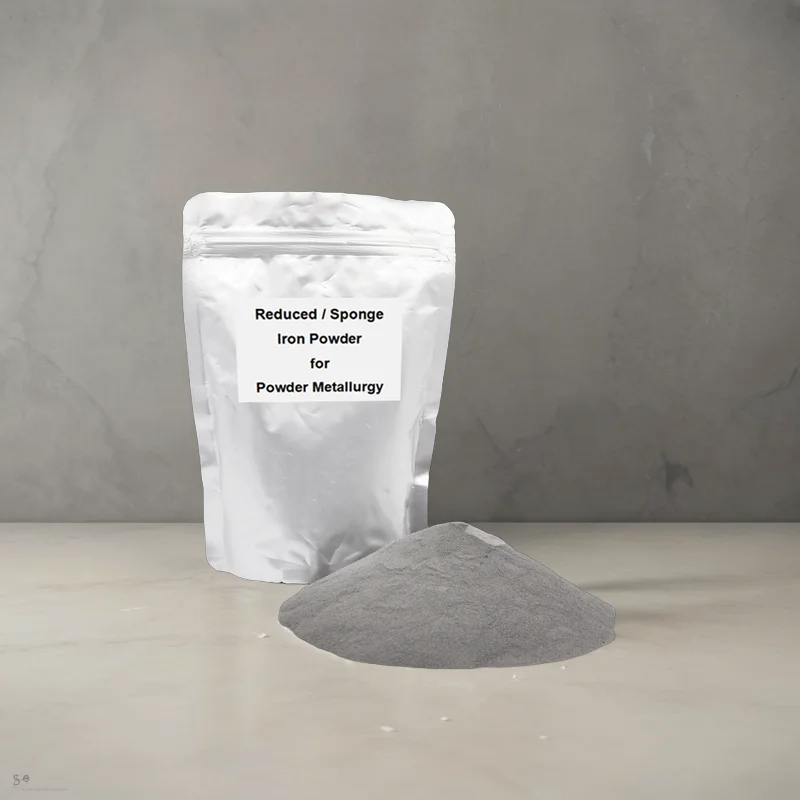
25kg/bag, 1000kg/bag, the package can be customized by buyer’s requirements.


Stable raw materials and controlled production processes help maintain batch-to-batch consistency.
Different Fe contents, particle sizes, apparent densities and physical characteristics are available.
We recommend the appropriate grade according to your manufacturing process rather than simply supplying a standard powder.
Particle size distribution, Fe content, oxygen content and other parameters can be adjusted according to application requirements where technically feasible.
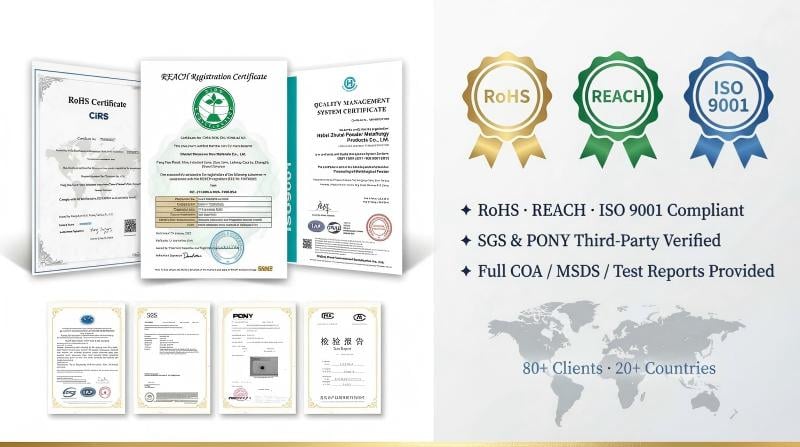
We provide COA, technical documentation, packing information and export support for international customers.
1. What is reduced iron powder?
Reduced iron powder is elemental iron powder produced by reducing iron oxides. It is also commonly called sponge iron powder because of its porous and irregular particle structure.
2. What is reduced iron powder used for?
Reduced iron powder is mainly used in powder metallurgy, welding electrodes, friction materials, oxygen absorbers, hand warmers, water treatment, diamond tools and magnetic materials.
3. What is the difference between reduced iron powder and atomized iron powder?
Reduced iron powder generally has an irregular, porous particle structure, while atomized iron powder typically has more compact particles. The appropriate powder depends on the required compressibility, apparent density, sintering behavior and final application.
4. What particle sizes are available?
Common grades include 100 mesh, 150 mesh, 200 mesh, 300 mesh, 325 mesh, 400 mesh and finer sizes. Customized particle size distributions can also be discussed according to the application.
5. Can you provide customized reduced iron powder?
Yes. We can recommend or customize reduced iron powder according to Fe content, particle size, apparent density, oxygen content, flowability and application requirements.
6. Is reduced iron powder suitable for powder metallurgy?
Yes. Reduced iron powder is widely used as a raw material for powder metallurgy because of its good compressibility, green strength and sintering characteristics.
7. Can reduced iron powder be used for welding electrodes?
Yes. Specific grades are used in welding electrodes, welding rods and flux-cored or metal-cored wires. The recommended grade depends on the electrode formulation and required particle size.
8. Can reduced iron powder be used in hand warmers?
Yes. Iron powder is commonly used as the active iron component in disposable hand warmers and heat packs. The oxidation reaction generates heat under controlled conditions.
9. Can you provide samples for testing?
Yes. Samples can be provided for qualified customers to evaluate particle size, chemical composition, apparent density, compressibility and application performance.
10. What information should I provide for a quotation?
Please tell us your application, required Fe content, particle size/mesh, apparent density, quantity and destination country. We can then recommend a suitable reduced iron powder grade and provide a quotation.
Tell us your application, particle size, Fe content, required quantity and destination. Our technical team can recommend a suitable reduced iron powder grade and provide COA, TDS, MSDS and samples for evaluation.
Copyright © Shanghai Knowhow Powder-Tech Co.,Ltd. All Rights Reserved - Privacy Policy