

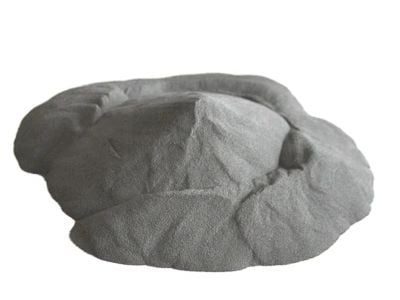
316L stainless steel powder is vital in the additive manufacturing of medical implants due to its superior corrosion resistance, mechanical properties, and biocompatibility. For B2B buyers in the medical device sector, understanding the significance and selection of this material is crucial in ensuring the production of safe and effective implants. This article will explore why 316L stainless steel powder is non-negotiable for medical implant additive manufacturing, addressing key concerns such as material specifications, application suitability, and common production challenges.
Understanding the Importance of 316L Stainless Steel Powder in Medical Implants
316L stainless steel powder is a low-carbon variant of 316 stainless steel, specifically designed to enhance its corrosion resistance and mechanical strength. In medical implants, the material's biocompatibility is critical since these devices are in direct contact with bodily tissues. The unique composition of 316L offers excellent resistance to pitting and crevice corrosion, making it suitable for long-term implantation in various environments within the human body.
The mechanical properties of 316L stainless steel, such as tensile strength and fatigue resistance, ensure that implants can withstand the stresses encountered in daily activities. Additionally, the powder's fine particle size allows for precise layer deposition during the additive manufacturing process, promoting enhanced detail and structural integrity in the final product. For buyers, selecting 316l stainless steel powder powder ensures compliance with stringent regulatory requirements while also meeting the performance expectations of medical applications.
How to Choose Quality 316L Stainless Steel Powder for Your Project?
When sourcing 316L stainless steel powder, several factors should be considered to ensure quality and suitability for your specific application. First, verify the particle size distribution, as this significantly influences the powder's flowability and sintering behavior during the additive manufacturing process. A well-defined particle size range typically enhances packing density and improves mechanical properties.
Next, examine the chemical composition of the powder. Confirm that it meets ASTM F3001 standards or equivalent specifications for medical applications, which dictate acceptable limits for trace elements and impurities. Quality certifications, such as ISO 9001, indicate that the manufacturer follows rigorous quality control processes, ensuring consistency and reliability in production.
Additionally, evaluate the manufacturer's ability to provide customization options. Depending on your specific application, you may require variations in particle size or surface treatment to optimize the powder for your intended use. A reputable supplier will be willing to work with you to understand your needs and provide tailored solutions.
Applications of 316L Stainless Steel Powder in Additive Manufacturing
316L stainless steel powder is predominantly used in the additive manufacturing of medical implants, including orthopedic devices, dental implants, and surgical instruments. Its ability to be precisely layered during the printing process allows for the creation of complex geometries that traditional manufacturing methods cannot achieve.
In orthopedic applications, 316L stainless steel implants can be designed with intricate lattice structures that enhance osseointegration the process by which bone directly attaches to the implant. This is particularly beneficial for joint replacements and spinal implants, where stability and durability are paramount. In dental applications, the biocompatibility of 316L ensures that implants can integrate seamlessly with natural teeth, providing long-lasting solutions for patients.
Moreover, as additive manufacturing technology continues to evolve, the potential applications for stainless steel 316l powder powder are expanding. Innovations in 3D printing techniques enable the production of patient-specific implants, further enhancing the effectiveness of medical treatments.
Common Problems in Medical Implant Production and Their Solutions
While additive manufacturing offers significant advantages, several challenges can arise during the production of medical implants using 316L stainless steel powder. One common issue is the presence of porosity in the final product, which can compromise mechanical properties and biocompatibility. This can often be attributed to inadequate powder flowability or improper processing parameters.
To mitigate porosity, buyers should ensure thorough evaluation of the powder's flow characteristics and implement stringent quality control measures during the printing process. Regular monitoring of temperature, laser power, and scanning speed can also help prevent defects.
Another challenge is the post-processing requirements of printed parts. Heat treatment is often necessary to relieve internal stresses and improve microstructure. Buyers should work closely with their suppliers to establish a reliable post-processing protocol that aligns with the specific requirements of 316L stainless steel.
Lastly, buyers should be prepared for potential issues related to regulatory compliance. As medical devices undergo rigorous scrutiny, maintaining detailed documentation of the manufacturing process and material specifications is essential for successful approval from regulatory bodies.
Installation Guidance for 316L Stainless Steel Powder in Medical Devices
When integrating 316L stainless steel powder into medical devices, precise installation and handling practices are crucial for ensuring product integrity and performance. First, it is vital to handle the powder with care to avoid contamination, which can compromise the biocompatibility and mechanical properties of the final implant. Implementing cleanroom environments and using appropriate PPE (personal protective equipment) during handling can minimize risks.
During the additive manufacturing process, ensure that the printing equipment is calibrated correctly. This includes confirming that the laser parameters are optimized for 316L stainless steel powder, as deviations can lead to poor layer adhesion or structural weaknesses. Conducting a pre-production trial run with a sample batch can help identify any potential issues before scaling up to full production. Finally, after printing, follow appropriate post-processing steps, such as heat treatment and surface finishing, as specified for 316l metal powder. Collaborating with experienced partners for installation and processing can ensure that the medical implants produced meet the highest quality standards, ultimately leading to safer and more effective medical solutions.
Table of Contents
- Understanding the Importance of 316L Stainless Steel Powder in Medical Implants
- How to Choose Quality 316L Stainless Steel Powder for Your Project?
- Applications of 316L Stainless Steel Powder in Additive Manufacturing
- Common Problems in Medical Implant Production and Their Solutions
- Installation Guidance for 316L Stainless Steel Powder in Medical Devices